Bacteriological Analysis of Pharmaceutical Waste Water and Surrounding Environmental Waste Samples in South India
DOI:
https://doi.org/10.5530/ctbp.2025.4s.10Keywords:
Pharmaceutical effluent, resistant bacteria, isolation, identification, Antimicrobial resistanceAbstract
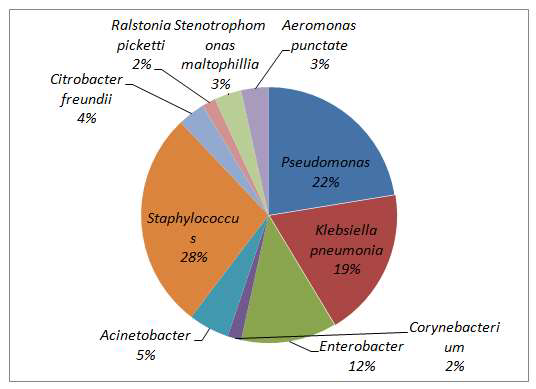
To isolate and characterize the aerobic and anaerobic bacteria from South Indian pharmaceutical waste water, surface water, and ground water samples around the pharmaceutical industries. Methods: In total, 55 samples were collected from Chennai, Nellore, Hyderabad, Kerala, and Bangalore in southern India. The bacteria were isolated using various conditions, and their identification was then confirmed using biochemical characterization. VITEK 2 Compact and VITEK MS are frequently used for further identification of bacterial isolates. Results: From 55 samples, 48 isolates totaling 10 distinct bacteria were identified. The identified bacterial isolates were Klebsiella pneumoniae (19%), Pseudomonas aeruginosa (22%), Enterobacter aerogenes (12%), Corynebacterium sp. (2%), Acinetobacter sp. (5%), Aeromonas punctata (3%), Ralstonia picketti (2%), Staphylococcus aureus (28%), Stenotrophomonas maltophillia (3%), and Citrobacter freundi. Conclusion: The study's findings indicated that numerous bacterial species were present in wastewater, surface water, and groundwater samples from the pharmaceutical industries, but the spread of resistant microbes could be stopped by the effective implementation of effluent treatment plant protocols in every pharma industry. According to this study, pharmaceutical companies must have an efficient waste water treatment facility before discharging waste water into the environment in or