Design and In-silico Study of Hydroxychloroquine and Ivermectin Malaria-Based Drug Delivery System using Liposomal and Missile Carriers
DOI:
https://doi.org/10.5530/ctbp.2026.1.7Keywords:
Hydroxychloroquine, Ivermectin, liposomes, micelles, Molecular dynamicsAbstract
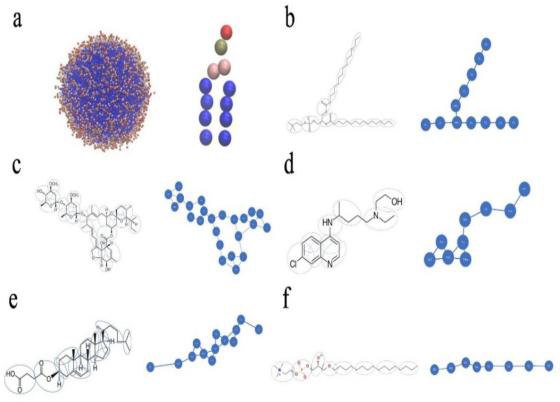
Malaria remains a major global infec- tious disease, contributing significantly to mor- bidity and mortality. Although various antimalar- ial drugs are available, their clinical application is often limited by severe side effects. Targeted drug delivery systems have been explored as a strategy to enhance therapeutic efficacy and minimize systemic toxicity. In this in-silico study, a liver-targeted drug delivery system for hy- droxychloroquine and ivermectin was designed and modeled using liposomal carriers (dipal- mitoyl phosphatidylcholine, DPPC) and micel- lar systems. Molecular dynamics simulations were conducted using GROMACS 2022.2 with the MARTINI coarse-grained force field. DPPC liposomes and polymeric micelles were mod- eled to assess drug encapsulation and delivery efficiency. Structural and dynamic properties, including moment of inertia (MOI), solvent-ac- cessible surface area (SASA), and radial distri- bution function (RDF), were analyzed at various simulation stages. Supplementary laboratory validation was performed, involving liposome preparation, size characterization, encapsula- tion efficiency, and release kinetics. Simulations revealed that DPPC liposomes were highly ef- fective for delivering hydroxychloroquine to the lysosomal compartment, while micelles were found to enhance ivermectin solubility in hydro- philic environments. In vivo validation was not conducted, representing a key limitation. Nev-ertheless, valuable insights into the potential of liposomal and micellar carriers for targeted malaria therapy were provided. Further exper- imental studies are recommended to validate and refine these computational findings.