Ocean Pollutants and Human Health: A Scientometric Perspective
DOI:
https://doi.org/10.5530/ctbp.2026.2.22Keywords:
Heavy metals, Human health, Organic pollutants, Toxicity, WaterAbstract
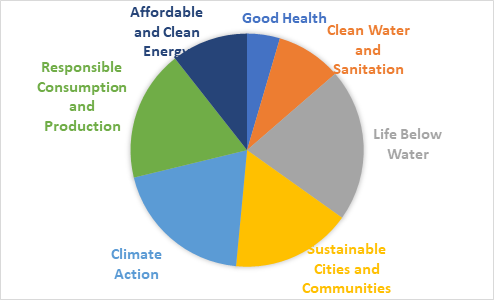
Oceans occupy more than 70% surface of the Earth, and are an important part of sustaining ecological balance and human life. Unfortunately, growing human interventions are transforming the ocean into a collection basin of various types of contaminants that threaten not only marine heath but human health as well. The purpose of this study is to provide a scientometric review of global research about ocean contaminants and human health over the last twenty years (2004 - 2024), and to assess the relevant research coming from India. A search of the Web of Science Core Collection (WoSCC) resulted in a total of 20,688 global publications (articles, reviews, and conference papers) related to the category of ocean contaminants and human health. Only 1,624 publications were from India, which were analysed using VOSviewer and MS-Excel. The results of keyword mapping revealed that “heavy metals” keyword was most often used by authors, in addition to others such as bioremediation, phytoremediation, adsorption, and toxicity risk assessment. Studies frequently looked at contaminants such as arsenic, cadmium, and lead, as emphasis was placed on bioaccumulation and ecological problems. Country collaboration mapping indicated that India holds a strong position globally, with significant collaborative studies with the USA, Germany, and Australia, as well as with researchers and institutions from India including IITs, BHU and CSIR. The research themes align strongly with Sustainable Development Goals. Indian funding agencies including UGC, DST, and CSIR was a first choice for funding from Indian authors in this research domain.