In silico evaluation of flavanones as anti-psoriatic agents targeting inflammatory pathways: Molecular docking studies and ADMET profiling
DOI:
https://doi.org/10.5530/ctbp.2026.2s.1Keywords:
Molecular docking studies, ADMET profiling, Psoriasis, Flavanones, RedockingAbstract
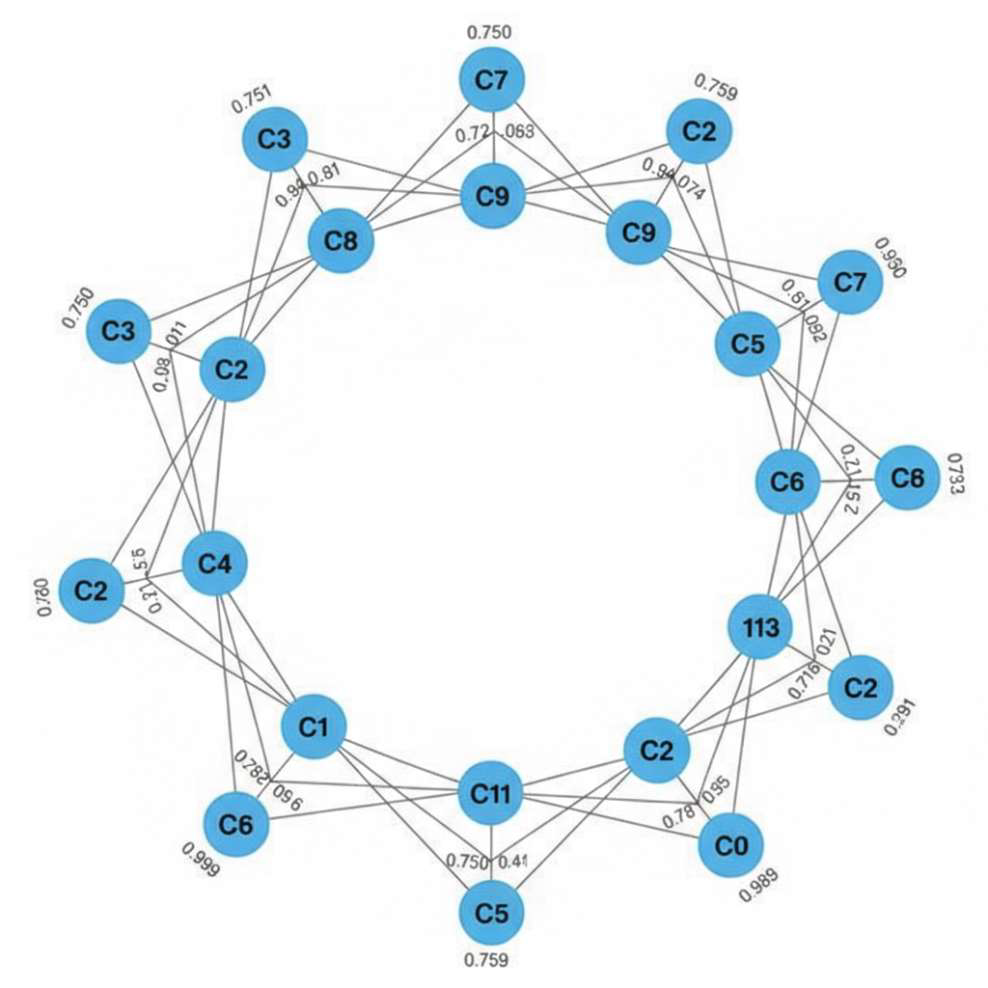
Background: Flavanones, a subclass of polyphenolic secondary metabolites, exhibit significant anti-inflammatory, antioxidant, and antiproliferative properties relevant to psoriasis therapy. Structure-based drug design through molecular docking enables prediction of ligand–protein interactions by estimating binding affinities and characterizing key non-covalent interactions, thus facilitating the identification of flavanone scaffolds with prospective antipsoriatic potential. Method: AutoDock Vina was used to dock flavanone ligands against psoriasis-related protein targets, predicting binding affinities and interaction profiles relative to standard inhibitors. In silico pharmacokinetic and ADMET properties were assessed using pkCSM and SwissADME to evaluate drug-likeness and optimize lead selection. Results: Narirutin and Hesperidin exhibited strong binding affinity towards the psoriasis targets, while Hesperidin, Neoeriocitrin, Narirutin, Neohesperidin, and Poncirin showed Lipinski’s violation and lower ADMET profiles. Hierarchical cluster dendrogram and similarity network give a detailed data set analysis. Conclusion: Highthroughput screening enables rapid, costeffective drug discovery. Flavanones demonstrated superior in silico anti-psoriatic activity compared to standard drugs, though low solubility limits bioavailability. Nanoformulations could enhance target-site delivery, and further clinical studies are needed to develop these plant-derived compounds into effective therapeutics.