Quality by Design Approach in the Development of a Stability-Indicating RP-HPLC Technique for Levodopa and Benserazide
DOI:
https://doi.org/10.5530/ctbp.2026.2s.3Keywords:
Levodopa, Benserazide, RPHPLC, Quality by Design, Stability-Indicating Method, Method ValidationAbstract
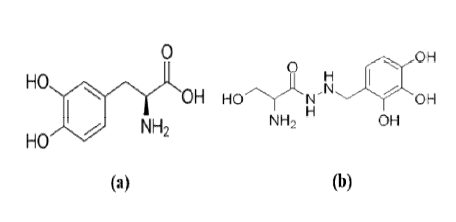
The study demonstrates development & validation of stability-indicating RP-HPLC technique for simultaneous estimation of Levodopa & Benserazide within a Quality by Design (QbD) framework. Critical method parameters (CMPs) - composition of movable phase, rate of flow, & temperature of column were systematically optimized to achieve predefined critical quality attributes (CQAs), including resolution, tailing factor, and theoretical plates. Separation of compounds in chromatography was done on HPLC system of Waters Alliance make equipped with quaternary gradient pump & detection achieved with UV at 228 nm, with C18 column. The optimized mobile phase consisted of acetonitrile & 0.1% triethylamine buffer (pH 2.5, attuned with orthophosphoric acid) in 46.5:53.5 v/v ratio, delivered at rate of flow at 1.0 mL/min. Retention times for Levodopa & Benserazide were 3.422 & 5.330 minutes, correspondingly. Stress studies under various conditions established, method’s stability-indicating capability. Validation performed in accordance with guidelines of ICH Q2(R1) demonstrated excellent linearity (R² > 0.999), accuracy (98-102%), precision (RSD < 2%), robustness, & sensitivity. The integration of QbD principles enhanced method robustness, defined a regulatory - compliant design space, and ensured lifecycle reliability. Developed RP-HPLC technique is therefore reliable & versatile tool for routine quality control of Levodopa & Benserazide in formulations.