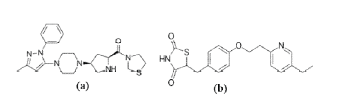
Optimization and Validation of Stability-Indicating RP-HPLC Method for Teneligliptin and Pioglitazone using Response Surface Methodology
DOI:
https://doi.org/10.5530/ctbp.2026.2s.16Keywords:
Teneligliptin, Pioglitazone, HPLC, Response Surface Methodology, Validation, Forced Degradation StudiesAbstract
The research work discloses establishment & thorough validation of method for stability-assessing RP-HPLC system designed for concurrent assessment of Teneligliptin & Pioglitazone in both bulk drug and tablet formulations. Response Surface Methodology was applied to optimize key chromatographic variables, including acetonitrile concentration in mobile phase (ranging from 70% to 80%), rate of flow (0.9 to 1.1mL/minute), & temperature of column (30°C to 40°C), in order to meet predefined critical quality attributes (CQAs) as peak retention time, resolution, & tailing factor. HPLC system of Waters Alliance make, operating with UV detector set to 229nm, was employed for separation process. Optimized composition of mobile phase was combination of 71.9:29.1 (v/v) acetonitrile & HSA buffer, with buffer pH attuned to 2.5 with orthophosphoric acid. Established retention times for Teneligliptin & Pioglitazone were 5.615 and 2.258 minutes, correspondingly. Stress testing confirmed that technique effectively separated APIs from their degradation products, validating its stabilityindicating nature. Method validation, conducted in harmony with ICH guidelines, confirmed strong linearity, high precision, accuracy, and robustness. Recovery values were within 98-102% range, with no observable interference from excipients or degradation products. Furthermore, low LOD and LOQ demonstrated method’s suitability for sensitive & routine pharmaceutical analysis. In summary, RP-HPLC method developed and optimized through RSM offers robust, cost-effective, and reproducible analytical approach, well-suited for quality control & routine assessment of Teneligliptin & Pioglitazone in commercial pharmaceutical preparations.