Molecular Docking of Cyclic Peptides Against the Quorum-Sensing LasR Protein of Pseudomonas aeruginosa
DOI:
https://doi.org/10.5530/ctbp.2026.4.41Keywords:
Antimicrobial peptides, Virtual screening, HADDOCK, Molecular docking, ADMETAbstract
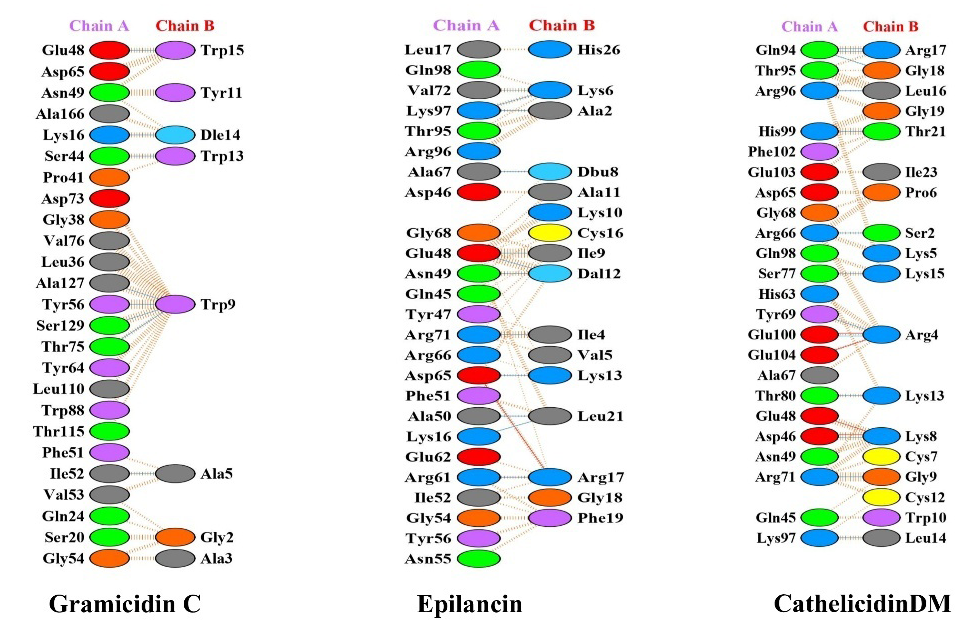
The emerging resistance of microorganisms to commonly used antibiotics and the emergence of P. aeruginosa as one of the ESKAPE pathogens necessitate the search for and development of newer drugs. So far, only a limited number of synthetic compounds have been reported to disrupt quorum sensing (QS). Therefore, the identification and development of novel compounds targeting quorum sensing may provide an effective strategy for controlling P. aeruginosa infections. Hence, in this study, peptide-protein docking was used to target the LasR protein with a small peptide library, and the resulting peptides’ pharmacokinetic properties were evaluated. Out of the 101 peptides, Gramicidin C (-101.5 ± 4.4), Epilancin (-99.8 ± 9.1), Cathelicidin-DM (-91.4 ± 6.3), Gassericin A (-86.4 ± 17.6), PO4 (-83.9 ± 5.7), Gramicidin B (-81.1 ± 1.0), and Salivaricin P (-79.7 ± 3.6) exhibited the highest Haddock score by extending the hydrogen bond interaction with the key Tyr 56 and Ser 129 amino acid residues of the Las R protein. These in silico findings suggest that the identified peptides exhibited high binding affinity toward the LasR protein of P. aeruginosa and may interfere with LasR-mediated quorum sensing, warranting further in vitro and in vivo studies to validate their effects on biofilm formation. A few identified peptides exhibited potential pharmacokinetic challenges; therefore, further formulation strategies would be required to overcome these limitations.