Phytofabrication of Selenium Nanoparticles Using Hibiscus rosa-sinensis and Evaluation of Their Antioxidant and Antidiabetic Activities
DOI:
https://doi.org/10.5530/ctbp.2026.4.49Keywords:
Selenium nanoparticles, Green synthesis, Hibiscus rosa-sinensis, Antioxidant activity, Antidiabetic activityAbstract
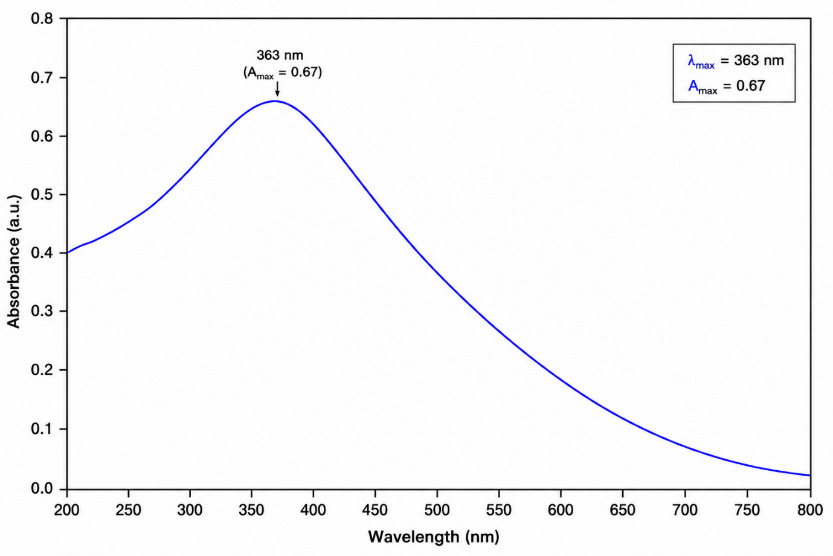
The present study aimed to synthesize selenium nanoparticles (SeNPs) using Hibiscus rosa-sinensis leaf extract through a green and eco-friendly approach and to evaluate their antioxidant and antidiabetic potential. The biosynthesis of SeNPs was confirmed by the appearance of characteristic brick red coloration and UV–Visible spectroscopy showing an absorption peak at 363 nm. Dynamic light scattering (DLS) analysis revealed an average hydrodynamic particle size of approximately 118 d. nm, while zeta potential analysis demonstrated a surface charge of −21 mV, indicating good colloidal stability. Fourier Transform Infrared (FTIR) analysis confirmed the involvement of phytochemical functional groups in the reduction and stabilization of SeNPs. Scanning electron microscopy (SEM) analysis revealed predominantly spherical to quasi-spherical aggregated nanoparticles. The antioxidant activity of the synthesized SeNPs was evaluated using DPPH and ABTS free radical scavenging assays. The SeNPs exhibited strong concentration- dependent antioxidant activity with IC₅₀ values of 34 μg/mL and 37 μg/mL for DPPH and ABTS assays, respectively. In addition, the antidiabetic activity of SeNPs was assessed using α-amylase and α-glucosidase inhibitory assays. The synthesized SeNPs demonstrated significant enzyme inhibitory activity with IC₅₀ values of 480 μg/mL for α-amylase and 390 μg/mL for α-glucosidase inhibition. The enhanced biological activities may be attributed to the synergistic interaction between selenium and phytochemicals present in the plant extract. Overall, the present findings suggest that green synthesized selenium nanoparticles using Hibiscus rosa-sinensis leaf extract possess promising antioxidant and antidiabetic properties and may serve as potential nanotherapeutic agents for biomedical and pharmaceutical applications.