A Hybrid Graph Attention Network Integrating Coagulation Cascade Biology Developed for Transductive Prediction of Bleeding Disorders
DOI:
https://doi.org/10.5530/ctbp.2026.4.50Keywords:
Coagulation cascade, Graph Attention Network, Graph neural networks Hemophilia, Systems biology, von Willebrand diseaseAbstract
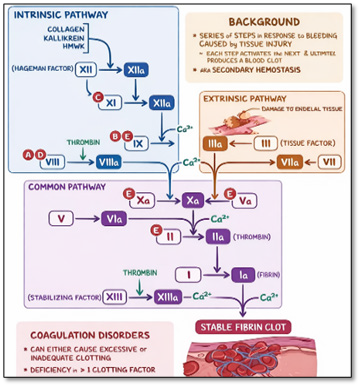
Disorders of blood coagulation arise due to the complex, nonlinear interactions among multiple clotting factors and regulatory proteins. These disorders can be caused within the intrinsic, extrinsic, and common pathways. Traditional mathematical and machine learning approaches study these disorder pathways independently though models can analyze the coagulation cascade due to the existing system level architecture. In this study, a biologically constrained, graph-based learning framework is proposed for predicting coagulation disorders. The coagulation cascade is modeled as a directed network integrating patient’s individual factor activities with established biochemical interactions. A Graph Attention Network (GAT) is applied to understand the significant relation of coagulation factors and their interactions. Thereby GAT network enables interpretable disorder classification. The proposed model supports transudative interpretation of unseen patient data into the trained graph without retraining. The framework is evaluated using synthesized clinical datasets representing 6 types of blood disorders. Coagulation disorder is caused due to the deficiency of Factor VIII causing Hemophilia A, Factor IX causing hemophilia B, Factor XI causing hemophilia C, Factors IX, II, X, and VII causes vitamin K deficiency, Factor VIII causing von Willebrand disease, and normal coagulation profiles are the types of blood disorders considered for the study. Results demonstrate that the proposed approach effectively captures pathway level dependencies and accurately distinguishes the coagulation disorder. The proposed approach predicts the type of disorder with Macro F1 – Score of 0.013 and accuracy of 0.2915. The future scope is to implement the model on real world patient records and further improve the model.